2026-11-06 · Phil Reynolds
Common Causes Of Low Water Pressure In Older Jackson Homes
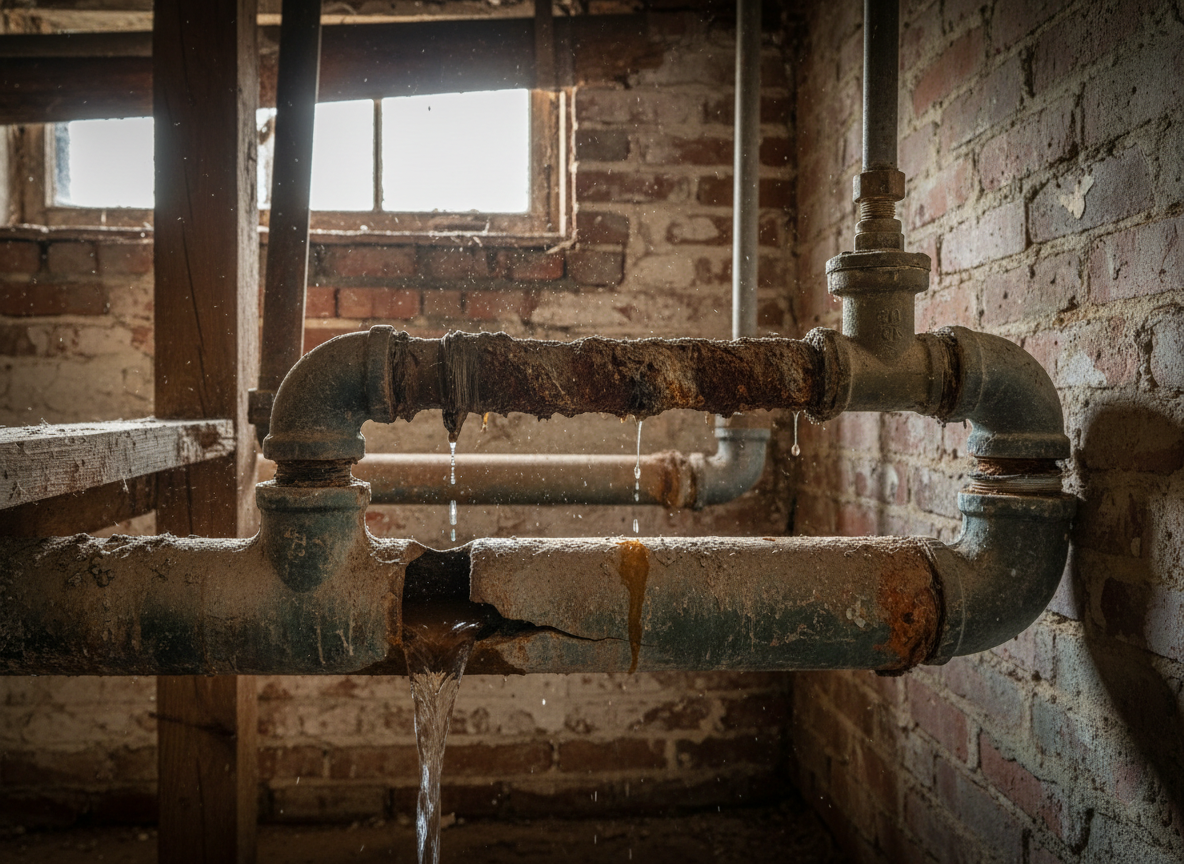
In older Jackson homes built before the 1970s, low water pressure most often stems from corroded galvanized steel pipes, mineral scale inside lines, and hidden leaks that develop after years of freeze-thaw cycles in Jackson County.
Corroded Galvanized Pipes in Pre-1970 Homes
Homes in Old Towne, Downtown Jackson, and Westwood frequently still carry the original galvanized steel supply lines installed when those neighborhoods were developed. Over decades, rust and corrosion narrow the interior diameter, cutting flow rates noticeably on upper floors or at fixtures farthest from the main. A plumber working these streets sees the same pattern: ½-inch lines reduced to a trickle by interior buildup that no amount of flushing clears. Replacement with copper or PEX becomes necessary once pressure drops below usable levels for showers or laundry. These pipes also crack more readily during the cold snowy winters typical of the region, turning a pressure issue into a sudden leak.
Mineral Scale from Hard Water
Jackson County water carries enough dissolved minerals that scale coats the inside of older copper and galvanized lines, especially in homes near Loomis Park and Ganson Street. The scale accumulates faster in water heaters and supply branches that run through unheated basements or crawl spaces. Homeowners notice the drop first at the kitchen sink or shower head after the unit has sat unused through a long winter. Regular flushing of the water heater helps slow the process, yet many pre-1960 homes require periodic descaling or line replacement once flow falls below acceptable household levels.
Hidden Leaks Reducing Overall Pressure
Small leaks in supply lines or at joints often go unnoticed until pressure complaints arise. In South Jackson and around the Jackson County Courthouse area, older slab foundations and settled soil allow pipes to shift and develop pinhole leaks that steadily divert water before it reaches fixtures. A leak detection visit can isolate these without tearing up finished surfaces. Because Jackson experiences repeated freeze-thaw cycles each winter, even minor leaks worsen quickly once temperatures drop, turning a pressure problem into water damage if left unaddressed.
Water Heater Restrictions and Valve Issues
Many older homes rely on water heaters installed decades ago that now restrict flow through sediment buildup or failing shut-off valves. In neighborhoods such as Westwood and near the Ella Sharp Museum, 40- and 50-gallon tanks from the 1980s commonly develop scale at the dip tube and outlet, cutting pressure to hot-water fixtures first. Checking the temperature-pressure relief valve and inlet screen often reveals the restriction. When these components fail, a targeted water heater repair restores pressure without full replacement in many cases.
Seasonal Effects from Michigan Winters
The humid continental climate brings repeated deep freezes that stress older plumbing throughout Jackson County. Pipes in uninsulated walls or crawl spaces contract and expand, loosening joints and accelerating corrosion already present from years of hard water. Homeowners in Battle Creek Road corridors and near Michigan Theatre see pressure complaints spike every January and February. Learning how to prevent frozen pipes during Michigan winters helps reduce these seasonal drops. Addressing the underlying corrosion before the next cold snap prevents both pressure loss and burst lines.