2026-11-06 · Phil Reynolds
How To Prevent Frozen Pipes During Michigan Winters
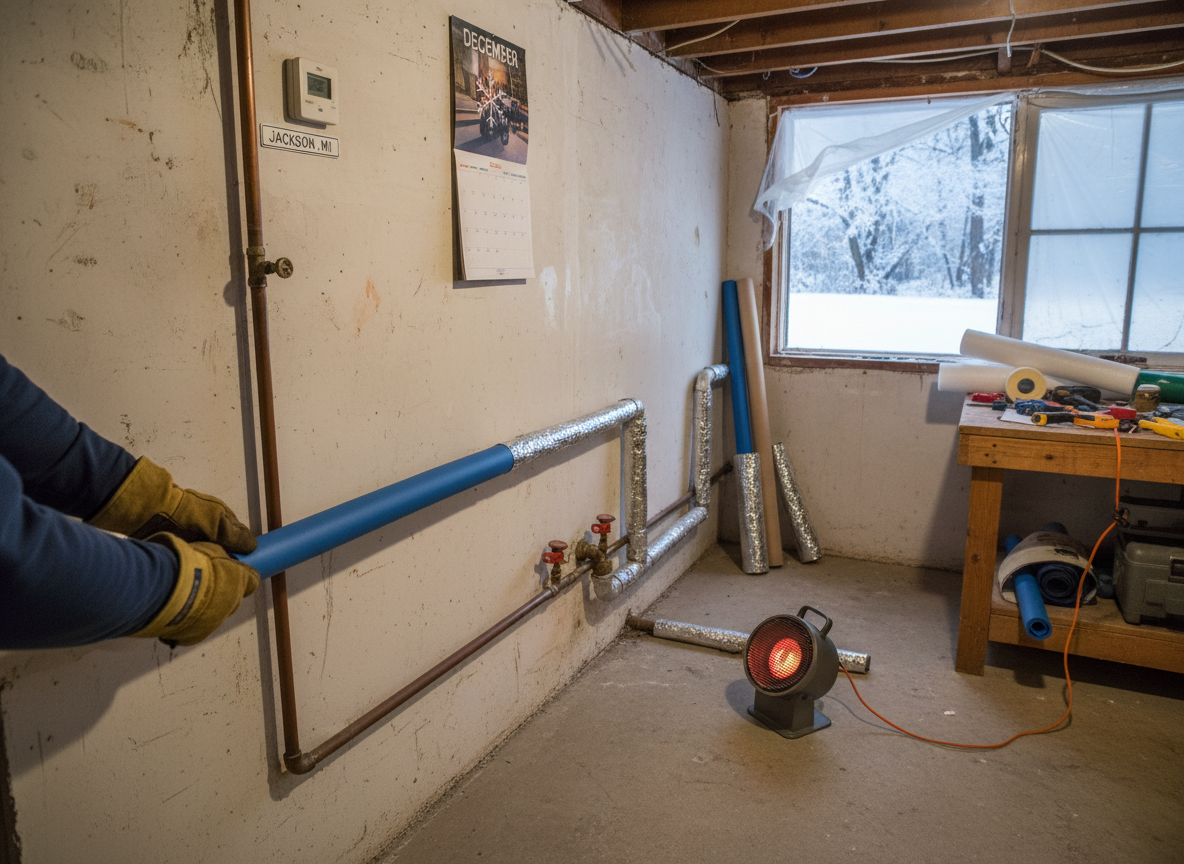
Jackson homeowners can prevent most frozen pipes by insulating vulnerable lines, allowing faucets to drip during cold snaps, and maintaining indoor temperatures above 55°F in unheated spaces. These steps address the county’s cold snowy winters that regularly push temperatures below zero and affect homes built before 1950 in areas such as Downtown Jackson and Ganson.
Understanding Local Winter Pipe Risks
Jackson sits in a humid continental climate zone where winters deliver prolonged freezes and heavy snow. Older housing stock in Old Towne and around the Jackson County Courthouse often features crawl spaces and exterior walls with minimal insulation, letting cold air reach supply lines. Nearby cities like Ann Arbor and Battle Creek share similar conditions, but Jackson’s older neighborhoods see more frequent issues because many homes still rely on galvanized or copper lines installed decades ago. Snow accumulation around foundations adds insulation on the outside while wind chills penetrate attics and garages, creating temperature swings that stress joints. Residents near Loomis Park or the Ella Sharp Museum frequently report problems after multi-day cold fronts because those homes sit on slightly lower terrain where cold air pools.
Insulating Exposed Pipes Effectively
Focus first on pipes in crawl spaces, basements, and exterior walls common throughout South Jackson and Westwood. Use closed-cell foam sleeves rated for at least R-4 on ½-inch and ¾-inch lines; wrap elbows and valves twice for full coverage. In unheated garages or laundry rooms, add heat tape controlled by a thermostat set to 38°F so it activates only when needed. Homeowners near Michigan Theatre have found that combining foam with reflective bubble wrap on north-facing walls cuts heat loss enough to stop overnight freezes. Check every accessible run once before Thanksgiving and again after the first heavy snow, because shifting soil in Jackson County can expose previously protected sections.
Maintaining Heat and Airflow
Keep the furnace running and set the thermostat no lower than 55°F even when away, especially in homes around the Michigan Theatre district where older ductwork leaves corners cold. Open cabinet doors under sinks to let warm air reach pipes, a simple step that works well in the compact floor plans of Old Towne. If a home has a finished basement addition, install a small plug-in heater with a built-in thermostat near the water meter. During extended absences, ask a neighbor to check the temperature or use a smart thermostat that alerts you if the house drops below 50°F. These habits prevent the slow freeze that starts in walls facing prevailing northwest winds.
Protecting Outdoor Faucets and Hose Bibs
Shut off interior valves to exterior spigots in late October and drain the lines completely before the first freeze. Install insulated covers rated for Michigan winters on every hose bib, including those on rental properties in Ganson. Homes near Loomis Park often have multiple spigots added during past renovations; label each shutoff valve clearly so you can locate them quickly after a storm. Never leave garden hoses attached once temperatures drop, because trapped water expands and cracks the bib or the pipe behind the wall.
Monitoring and Emergency Response
Watch for reduced flow or unusual noises at faucets during the first cold nights, signs that ice may be forming. If a line does freeze, open the nearest faucet and apply gentle heat with a hair dryer or heating pad rather than an open flame. For persistent problems in older Jackson homes, review common causes of low water pressure that often appear after repeated freeze-thaw cycles. When a pipe bursts, contact professional help immediately through emergency plumbing to limit water damage. Readers dealing with recurring issues may also want to explore common causes of low water pressure in older Jackson homes for long-term solutions.